The Empty Room Doesn't Need Cooling — But Your Ductwork Does

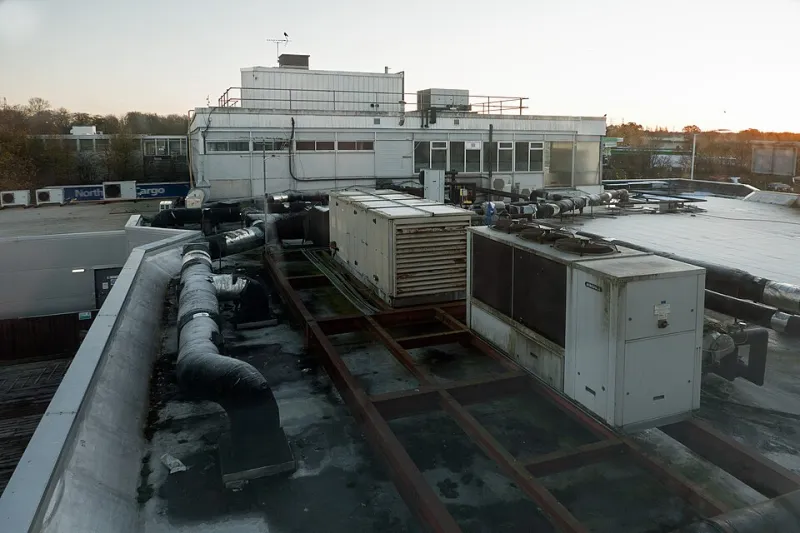
Photo: Neuroxic, CC BY 4.0, via Wikimedia Commons
On a cold week in Sutton, it is tempting to treat an unused room like a closed tab. The spare bedroom is only used at Christmas. The box room is now a storage dump. The back office above the shop has one desk in it and a lot of cardboard. So you shut the door, close the air-con vent and tell yourself you are saving energy.
It is a reasonable instinct. The result, unfortunately, is often the opposite of what you intended. An air-conditioning system is not a set of independent taps. It is a loop, and every vent you close changes the pressure inside that loop.
The instinct is reasonable — the result often isn't
If you have a wall-mounted split in one room, closing its louvres does very little to the rest of the house. But if you have ducted air-con, ceiling cassettes feeding several rooms, or a small-office system with branch ducts, closing a vent is not like turning off a light. The fan is still moving the same volume of air. The ductwork is still expecting the same path. When one outlet is blocked, the air goes somewhere else — through leaks, around joints, back through the return, or out of the nearest grille with a whistle.
That extra pressure is the bit people forget. The blower motor works harder, the airflow across the indoor coil becomes uneven, and the system can start short-cycling or running longer than it should. In a Sutton Victorian terrace with narrow ducts and a loft conversion, there is not much spare capacity to play with.
What a blocked vent actually does
Think of the ductwork as a set of motorway lanes. Close one lane and the traffic bunches up. In cooling terms, that can mean three things:
- Higher static pressure. The fan pushes against a narrower route. That can increase noise, reduce overall airflow and make the motor work harder.
- Uneven coil temperatures. If less air passes over the indoor coil, parts of it get colder than they should. In cooling mode this can lead to icing; in heating mode it can affect defrost behaviour.
- Bypass leakage. Air finds the path of least resistance, and that is often a poorly sealed joint in a loft or a ceiling void. You end up cooling the void rather than the room.
None of that shows up as a dramatic fault straight away. It shows up as a higher bill, a noisier system, a room that never quite reaches temperature, or an engineer finding low airflow on a service visit.
The damp room you didn't plan for
There is a second issue, and it matters in UK homes: a closed room with no air movement gets stale. In a spare bedroom or a back office, moisture from the air, from stored cardboard, or from the adjoining bathroom can settle on cold surfaces. Over a winter, that is how you get musty smells, black mould patches on a skirting board, or condensation on a window that nobody is checking.
Air-conditioning is not a ventilation system, but it does move air. Shut the vent and shut the door, and you remove that small amount of circulation. In a Sutton flat with a box room used for storage, the result can be a room that smells damp by February without anyone noticing why.
A better way to zone a Sutton home or small office
If you want to stop cooling a room you are not using, the aim is controlled zoning — not simply blocking a grille.
For ducted systems: ask about proper dampers or motorised zoning. A damper is designed to restrict airflow in a controlled way, and a good installer will balance the system so the remaining rooms still get their share. Do not close every branch and expect the system to cope. If you are not sure which vents are on which branch, book a survey rather than guessing.
For small offices: a back office with one desk is often better served by its own small split system than by a branch duct from a central unit. That way you can switch it off entirely without affecting the main space. It also gives you a separate control point if the office is used irregularly.
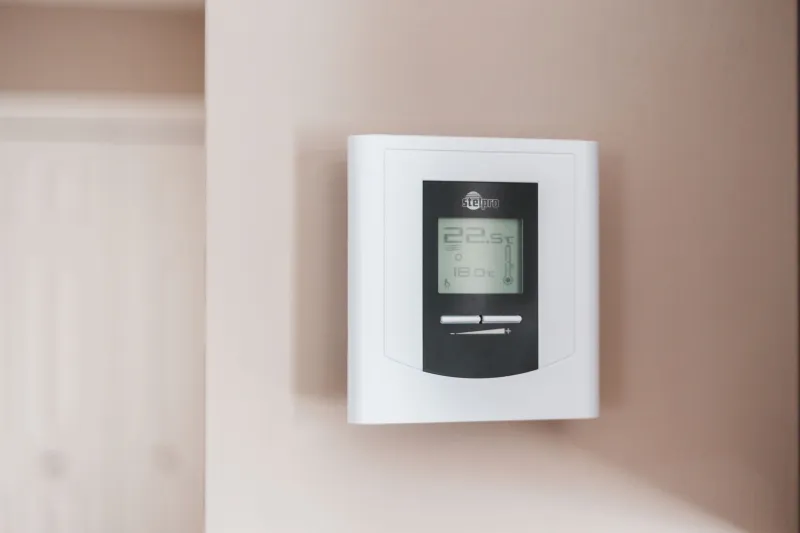
For homes: keep doors open when the system is running, or fit a transfer grille above the door so air can return. A closed door with a closed vent is a dead end. If the room is genuinely unused, set the thermostat back rather than shutting the airflow completely. A few degrees of setback costs far less than a repair visit.
The simple checks before you close anything
Before you shut a vent for the winter, check three things. First, is the room damp or cold enough to need background air movement? Second, is there a return-air path, or is the door tight to the carpet? Third, does the system have a zone controller, or are you improvising with the louvres?
If the answer to any of those is uncertain, leave the vent open and give us a call. A short service visit or a zoning check is cheaper than replacing a blower motor or dealing with a mould problem in a spare room nobody uses. In Sutton, we see plenty of systems that have been quietly strangled by good intentions. A little airflow is usually the cheaper option.