When the Kitchen Wins: Cooling a Sutton Café Without Inflating the Energy Bill

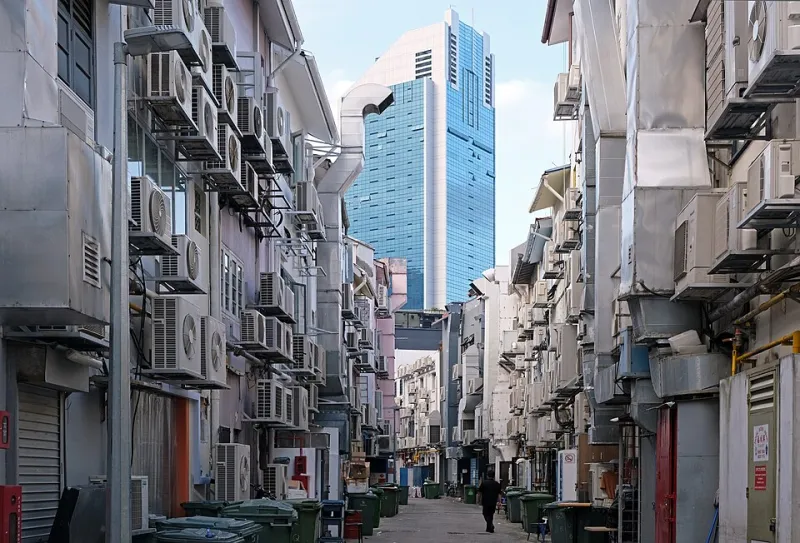
Photo: hayley green, CC BY-SA 2.0, via Wikimedia Commons
A café near Sutton station had a familiar problem. By Friday lunchtime the front of house was touching 26°C, the kitchen was well into the thirties, and the little portable air-con unit was making more noise than cold air. The owner had moved it from the counter to the back office and back again. It never really worked. That is not because portable units are useless. It is because the café was trying to cool one corner of a building that was generating heat in several places at once.
This is a common pattern in small hospitality sites around Sutton. The kitchen is the engine, but the whole building feels the heat. The answer is rarely one magic box. It is a sequence of sensible decisions about extract ventilation, zoning, equipment siting and maintenance, with running costs kept in view.
Where the heat actually comes from
In a small café, the cooking appliances are usually the biggest heat source. Ovens, fryers, grills, hobs, dishwashers and commercial fridges all add warmth. So do people, lights, screens, coffee machines and the sun coming through the front window. Then there are the doors: deliveries, customers coming and going, staff propping the back door open for air.
Every kilowatt of heat has to go somewhere. If it is not extracted at source or removed by a cooling system, it spreads through the building. That is why a small wall-mounted unit above the till can feel like it is doing nothing while the kitchen continues to heat the whole space.
First fix the kitchen: extract and make-up air
Before adding more cooling, look at the kitchen extract. A canopy hood over the cooking range should capture heat, steam, grease and smells at the point they are created. If the extract is weak, the grease filters are clogged or the ductwork is restricted, the kitchen will run hot and the extractor will sound strained.
Make-up air matters just as much. An extract system cannot pull air out if replacement air cannot get in. If the kitchen is starved of air, the extract becomes inefficient and doors can be hard to open. A balanced approach is better than simply opening a back door and hoping. Gas appliances make this a job for a qualified person, not a DIY experiment.
This is often the cheapest first win. Cleaning or upgrading the extract, keeping filters clean and making sure there is a sensible path for replacement air can drop kitchen temperatures and reduce the load on any cooling system in the customer area.
Split systems: right size, right place
For the customer area, a wall-mounted split system is often the practical choice. It is relatively straightforward to install, it can cool and dehumidify, and it can be zoned to the front of house rather than trying to serve the kitchen as well.
Size matters. A unit that is too small will run flat out on a busy Saturday and never quite catch up. A unit that is too large will short-cycle, which means it switches on and off quickly, dehumidifies poorly and can feel clammy. A proper heat-load check is better than guessing from the floor area alone.
Siting is just as important. The indoor unit should not blow directly onto a seating area or a till. It should be high enough to circulate air properly and not tucked into a corner where the return air is blocked. The outdoor unit needs space to breathe. A narrow alley where hot air recirculates, a boxed-in yard or a spot right under a neighbour's window will cause problems with performance or noise.
Zoning: do not cool the whole café for one hot corner
A single system trying to cool the kitchen, the servery, the seating area and the back office will usually fail at all of them. Different spaces have different heat loads and different occupancy patterns. Zoning is the practical answer.
Keep the kitchen on extract and local ventilation. Cool the customer area with its own system or a multi-split zone. Treat a small back office separately, especially if it contains a server cupboard, a photocopier or a second fridge. Close doors between zones where you can. A door between the servery and the seating area is not a barrier if it is always propped open, but even a self-closing door can make a difference.
What about portable units and quick fixes?
Portable air-con is tempting because it is cheap and immediate. In a busy café, though, it usually disappoints. It cools a small patch, dumps heat out of a window or duct, makes noise and creates condensate that has to be managed. With kitchen heat and door traffic, it is quickly overwhelmed. It can also be a trip hazard in a tight service area.
A cheap fix that runs all day can cost more than a properly sized system over a couple of summers. That does not mean every café needs a major installation. It means the quick fix should be treated as a stopgap, not the plan.
Running costs in plain English
The running cost of cooling depends on the size of the system, its efficiency, the temperature you ask it to reach and how often doors and windows are open. Every degree lower adds cost. In a café, the difference between 22°C and 24°C can be noticeable on the bill, especially during a long hot spell.
Inverter-driven units usually modulate their output rather than switching hard on and off, which helps with efficiency and comfort. Regular cleaning keeps that efficiency from drifting. Dirty filters, a clogged outdoor coil or a blocked condensate drain all make the system work harder for less result. If you want a realistic view of running costs, ask for a load check and a clear explanation of the proposed controls, not just a quote for a box on the wall.
A maintenance routine that suits a busy café
Front-of-house filters should be checked every few weeks in busy season and cleaned or replaced as needed. Kitchen extract grease filters need regular attention, often weekly in a busy kitchen. The outdoor unit should be kept clear of leaves, bins and stored equipment. Before summer, check the condensate drain and have the system serviced by a qualified engineer.
A maintenance contract is not glamorous, but it is usually cheaper than an emergency call-out in July and lost trade while the café is uncomfortably hot. It also keeps the equipment running closer to its designed efficiency, which is the quiet way to protect the energy bill.
A sensible order of work
Start with extract and make-up air. Then reduce obvious heat gains where you can:LED lighting, blinds on sunny windows, better door management and sensible siting for fridges and office equipment. Next, zone the cooling so the customer area is not carrying the kitchen. Then size and site the equipment properly. Finally, maintain it.
For the café near Sutton station, the fix was not one dramatic machine. It was a cleaned and rebalanced extract, a separate split for the front of house and a simple filter routine. The kitchen still gets warm in a heatwave, as kitchens do, but the customer area holds a comfortable temperature and the portable unit has gone. That is usually the realistic goal: not a fridge, just a room that works.
If you run a café, shop or small office in Sutton and the hot season is already on your mind, book a survey before the rush. A practical look at the whole space usually saves more than it costs.