Your Side of the Fence: Making an Outdoor AC Unit Live Quietly in a Sutton Terrace
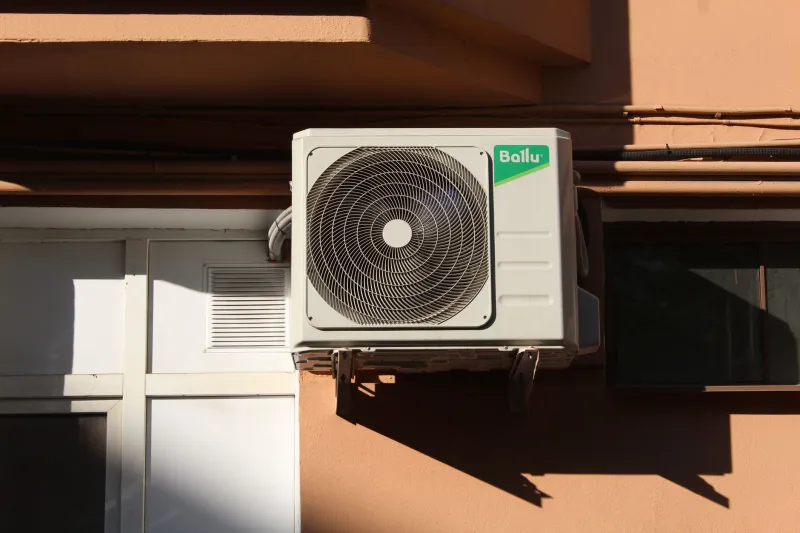
With the 2026 cooling season behind us, now is a sensible time to deal with a unit that has become the background noise of next door's summer. In Sutton's terraces, conversions and small shops, the gap between one building and the next can be a metre or less, and brick, fencing and hard paving have a habit of bouncing sound straight into a neighbour's kitchen window. The good news is that most condenser hums can be reduced without replacing the system — provided you deal with siting, mounting and maintenance in the right order.
Why the hum travels so well in Sutton's terraces
A modern outdoor unit is not usually deafening. The problem is the type of sound: a low, steady drone that carries further than a burst of conversation and is much harder to ignore when it starts at 11pm. In a terrace, sound can reflect off a side return, travel down an alley and arrive at a bedroom window it never pointed at. Flats make it worse. A unit on a flat roof, in a lightwell or on a bracket above a shared access path can affect several neighbours at once, even if it only belongs to one flat.
Where to put it — and where not to
There is no single legal distance from a boundary that solves noise. Manufacturer's clearances for airflow are a minimum, not a neighbour-friendly target. As a practical starting point, keep at least a metre from a boundary where you can, avoid pointing the fan at a neighbour's window, patio or favourite bit of garden, and leave room to reach the service valves without climbing over a fence.
Avoid the obvious trouble spots: directly under a neighbour's openable window, inside a narrow lightwell, on a shared party wall bracket, or on a front elevation facing the street if a neater rear position is possible. Also think about the drain. A condensate pipe that drips onto next door's path or into their gutter can turn a minor cooling job into a genuine grievance.
Planning permission, conservation areas and leases
Outdoor units are not automatically covered by permitted development, and the rules are not the same for a house, a flat and a small shop. Some domestic installations may fall within permitted development; many do not — especially in flats, on front elevations, or where the building is listed or sits in a conservation area. Parts of Carshalton, Cheam and the Sutton Garden Suburb have conservation-area designations, and Article 4 directions can remove rights that would otherwise apply. Listed buildings need consent for alterations.
If you rent or own a flat, the freeholder or managing agent usually has a say, and the lease may restrict external units altogether. For a shop, landlord consent and any planning conditions attached to the premises matter as much as the equipment itself. We are cooling engineers, not planning consultants, so check with Sutton Council's planning team or a local surveyor before you buy. It is far cheaper than moving a unit later.
Anti-vibration mounting: cheap, effective and often overlooked
A wall bracket without isolation turns the whole wall into a speaker. Rubber feet under a ground-standing unit, proper isolation pads under brackets and flexible connections on pipework can take the edge off a drone surprisingly quickly. Foam offcuts and old carpet under a compressor tend to compress, perish and make things worse. Ask for anti-vibration mounts designed for the weight of the unit, and make sure the bracket is fixed into something solid rather than a single skin of brick.
Night mode, timers and realistic expectations
Many modern units have a night mode that limits fan speed, and a timer can stop the system running during the late evening. Use them. But do not expect a magic button to fix an undersized unit, a dirty coil or a badly placed condenser. If the system is working harder than it should, it will be louder than it should be, whatever the remote says.
Maintenance that stops a drone becoming a dispute
A dirty coil makes the fan work harder and the compressor run longer. A loose panel, a dry bearing or a trapped cable can turn a soft hum into a whine. Book a service before next summer and ask the engineer to check fan balance, panel fixings, drain routing and the condition of any wall bracket. If the unit is old and the noise has changed, get it looked at rather than turning it up to compensate.
If the neighbour is already annoyed: a calm checklist
- Listen at the boundary, not just in your own garden. Note the time of day and whether the noise is a hum, a rattle or a whine.
- Check the simple things first: loose panels, debris in the fan, a missing rubber foot, a dripping drain.
- Have the unit serviced and ask specifically about noise and vibration.
- Adjust the schedule and night mode before assuming the unit needs replacing.
- Talk to your neighbour with a proposed fix and a timescale, not a defence of the installation.
- If the unit is badly sited, get a quote for relocation or acoustic enclosure before the disagreement hardens.
- Keep a short diary if the complaint continues. If it becomes a statutory nuisance, Sutton Council's environmental health team can advise.
One last tradesman's note: do not open the refrigerant circuit or start swapping parts to chase a noise. That is a job for someone with the right kit and certification. Most neighbour-friendly cooling fixes are about placement, mounting and maintenance — the unglamorous bits that keep a Sutton terrace peaceful on both sides of the fence.